
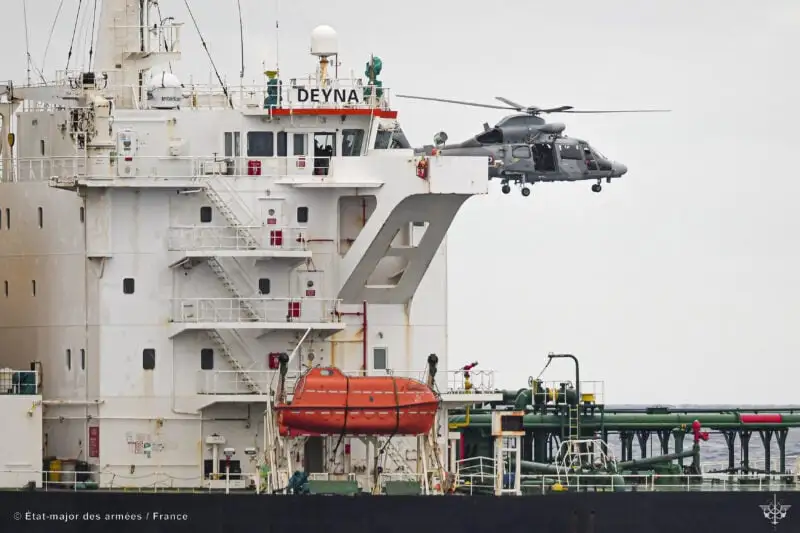
On March 20, 2026, the French Navy intercepted and boarded the oil tanker Deyna (Mozambique-flagged, suspected of flying a false flag) in the Western Mediterranean Sea. President Emmanuel Macron confirmed the operation, stating the vessel belongs to Russia’s “shadow fleet” a network of opaque-ownership ships used to export Russian oil and circumvent Western sanctions imposed over the Ukraine conflict.
The boarding occurred on high seas, with French naval forces (including helicopter insertion) supported by allies such as the United Kingdom, which provided intelligence and monitoring. A Western military source indicated the tanker was carrying Russian crude oil, having originated from a Russian port (details align with patterns of shadow fleet movements from Arctic or Baltic origins). No injuries or resistance were reported during the interception, and the vessel was seized for further investigation into sanctions violations, false flagging, and potential breaches of international maritime law.
French authorities, in coordination with judicial investigators, are conducting inspections to verify ownership, cargo documentation, and compliance with the G7 price cap on Russian oil. Macron emphasized that the action demonstrates France’s resolve to enforce sanctions, noting “the Iran war will not distract from stopping Russia” and that such operations target financing for Moscow’s military efforts. This follows prior French interceptions, including the Grinch tanker in January 2026 (released after multimillion-euro penalties) and others in 2025, highlighting escalating European efforts against shadow fleet activities.
The shadow fleet, estimated at over 400–600 vessels, relies on deceptive practices like flag-hopping (e.g., Mozambique, Comoros, Gabon), AIS manipulation, and ship-to-ship transfers to evade detection and maintain Russian oil exports to buyers in Asia and elsewhere.
Shipping impact includes increased scrutiny and risk for tankers in Mediterranean routes, potential detentions raising war risk/insurance premiums, delays for legitimate operators, and heightened volatility in tanker freight rates amid sanctions enforcement. Operators may face charterer hesitancy, rerouting, or exclusions for suspected shadow vessels, while the crackdown aims to tighten supply chains and pressure Russian revenues without fully halting flows.
This incident underscores ongoing sanctions/disruptions in the tanker sector, where naval interventions in key chokepoints and transit areas (Mediterranean as a route for Russian oil to non-sanctioning markets) directly affect global energy logistics, bunker demand, and trade security amid broader geopolitical strains.