
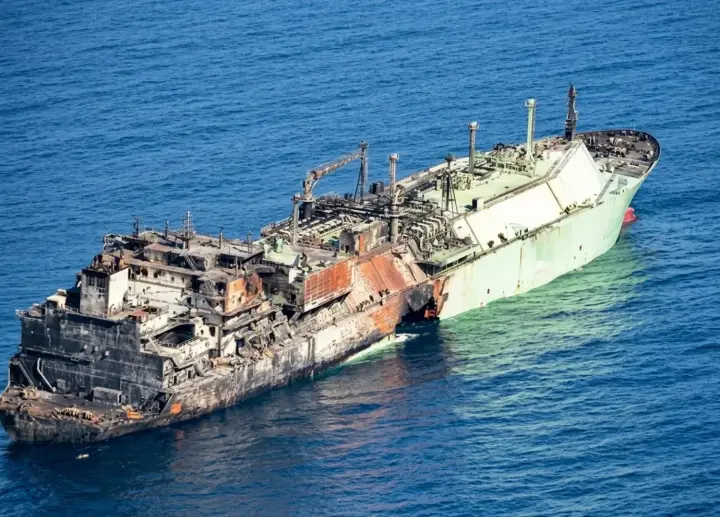
On March 24–25, 2026, Libya’s Coast Guard, supported by a central operations room involving multiple government entities, began towing the damaged Russian-flagged LNG tanker Arctic Metagaz away from Libyan territorial waters. The vessel had drifted dangerously close approximately 35 km off the western coast near the town of Zuwara after being adrift unmanned for nearly three weeks.
The Arctic Metagaz, a suspected member of Russia’s “shadow fleet” used to transport LNG while circumventing Western sanctions, was severely damaged on March 3, 2026, by a series of explosions attributed by Russia to Ukrainian naval drones. The attack caused fires and structural damage, prompting the crew of 30 to abandon ship. The tanker, carrying LNG from the Arctic port of Murmansk (with additional heavy fuel and diesel onboard), had been drifting in the central Mediterranean between Malta and Libya, raising serious environmental concerns across several Mediterranean countries.
Libya’s National Oil Corporation (NOC) had earlier contracted a specialist salvage firm (in coordination with Italy’s Eni) to secure the vessel and prevent a potential major spill. After the tanker entered Libyan search-and-rescue waters and approached the coast, authorities boarded it, attached a tugboat, and began towing it to a safer zone — reports indicate movement toward a designated safe area off the western coast or further into international waters to mitigate risks to Libya’s shoreline and offshore infrastructure.
No pollution or gas leaks have been reported so far, and Libyan officials described the situation as “under control” and “fully manageable.” The operation aims to avert an ecological disaster in the Mediterranean, a region already strained by ongoing geopolitical tensions and shadow fleet activities.
This incident highlights growing risks to shipping in the Mediterranean linked to the Russia-Ukraine conflict, including drone attacks on commercial vessels and the environmental hazards posed by damaged shadow fleet tankers. It adds to broader disruptions affecting LNG and tanker trades, with potential implications for insurance premiums, route security, and salvage operations in the central Mediterranean corridor.