
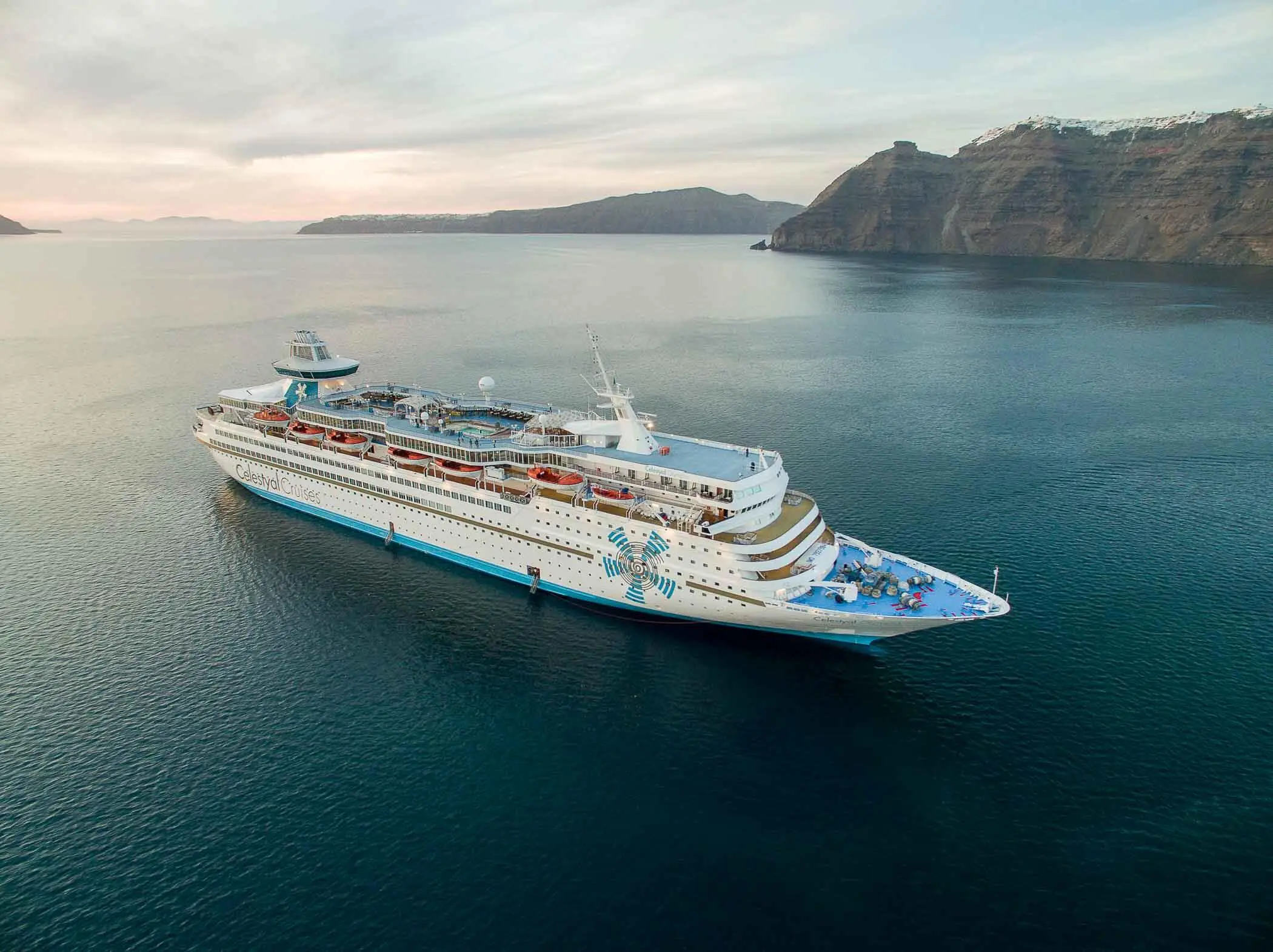
Celestyal Cruises has announced the cancellation of all scheduled sailings through the end of April 2026 as its two vessels, Celestyal Discovery and Celestyal Journey, remain stuck in the Persian Gulf unable to reposition to the Mediterranean.
The Celestyal Discovery is currently docked in Dubai, UAE, while the Celestyal Journey is in Doha, Qatar. Both ships were operating Arabian Gulf itineraries when the US-Israel conflict with Iran escalated in late February 2026, leading to Iranian threats against vessels and a near-total halt in commercial traffic through the Strait of Hormuz. The chokepoint remains effectively closed for safe transit, preventing the vessels from exiting the Gulf to reach their summer homeports in Greece (Piraeus and Lavrion).
The latest cancellations affect multiple Mediterranean and Greek Islands voyages originally scheduled for early to late April, including:
- April 3 sailing on Celestyal Discovery (3-night Greek Islands from Athens)
- April 4 departures on Celestyal Journey (7-night Heavenly Greece, Italy & Croatia and 14-night Mediterranean Icons)
- Additional April 6 and later itineraries covering Greece, Italy, and Croatia
This follows previous cancellations of March and early April sailings. All passengers booked on the affected voyages have already been safely disembarked earlier in March, with full refunds or future cruise credits offered. The line stated it continues to monitor the situation closely and hopes to resume operations as soon as safe passage through the Strait of Hormuz becomes possible.
The decision impacts hundreds of passengers and highlights the severe ripple effects on the cruise sector from geopolitical disruptions in the Middle East. Six cruise ships in total remain trapped in the region, including vessels from MSC, TUI, and Saudi operator Aroya.
Shipping and cruise industry impact includes lost revenue for operators, disrupted summer Mediterranean schedules, increased insurance and war risk costs, and potential knock-on effects on port calls in Greece, Italy, and Croatia. The prolonged Hormuz standoff continues to drive emergency surcharges, rerouting, and operational challenges across commercial shipping, now extending to passenger vessels.
This development underscores the vulnerability of cruise itineraries that rely on safe transit through critical chokepoints, forcing rapid adjustments to fleet deployment amid ongoing regional tensions.