
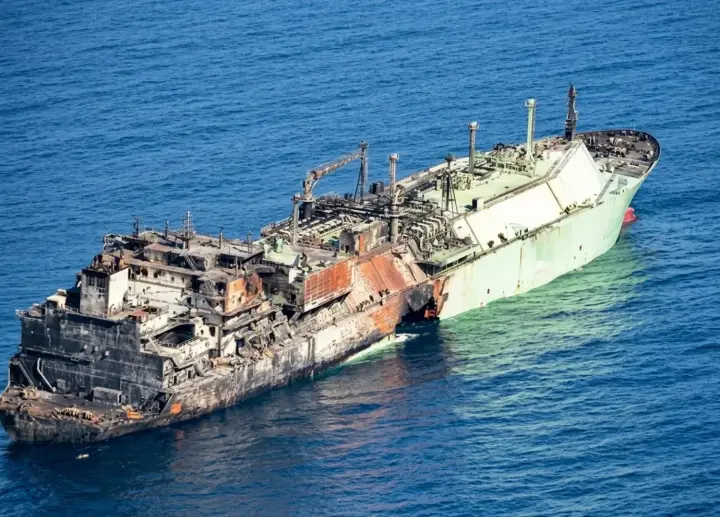
On April 2, 2026, at approximately 4:00 a.m. local time, the towing operation of the damaged Russian-flagged LNG tanker Arctic Metagaz broke loose due to harsh weather conditions, leaving the vessel completely adrift and out of control in the central Mediterranean Sea.
Libya’s Ports and Maritime Transport Authority issued an urgent navigational warning stating that strong winds of 40–50 knots and waves up to five meters caused the tow line to fail. The tugboat was unable to re-establish the connection under the hazardous conditions. The tanker is now drifting near the edge of Malta’s Search and Rescue (SAR) zone, posing renewed risks to maritime traffic and the marine environment.
The Arctic Metagaz, a suspected member of Russia’s shadow fleet, was damaged on March 3, 2026, by explosions and fire (attributed by Russia to Ukrainian naval drones) while carrying over 60,000 tons of LNG from the Arctic port of Murmansk. The crew of 30 abandoned ship, leaving the unmanned vessel adrift for weeks. Libyan authorities had boarded the ship near Zuwara in late March, attached a tug (with Egyptian expert support), and begun towing it away from the Libyan coast and offshore oil infrastructure to prevent an ecological disaster.
The latest failure comes after earlier reports of successful initial towing toward safer waters or Misrata. Libyan officials described the situation as “under control” until the storm hit. No pollution or LNG leak has been reported so far, but the vessel is listing and showing signs of worsening structural damage, including possible seawater ingress.
Maritime authorities in Malta, Italy, and other Mediterranean states have been alerted. The incident raises fresh concerns about the environmental threat from shadow fleet vessels operating in violation of sanctions, especially in busy Mediterranean corridors already strained by geopolitical tensions.
Shipping impact includes heightened navigational hazards in the central Mediterranean, potential delays or rerouting for vessels in the area, increased insurance premiums for tankers and LNG carriers, and added pressure on salvage and SAR resources. The event highlights the ongoing risks from damaged shadow fleet ships, which continue to drift after attacks linked to the Russia-Ukraine conflict.
This development follows Libya’s earlier efforts to tow the tanker away from its shores and underscores the challenges of managing unmanned, damaged vessels in adverse weather conditions.