
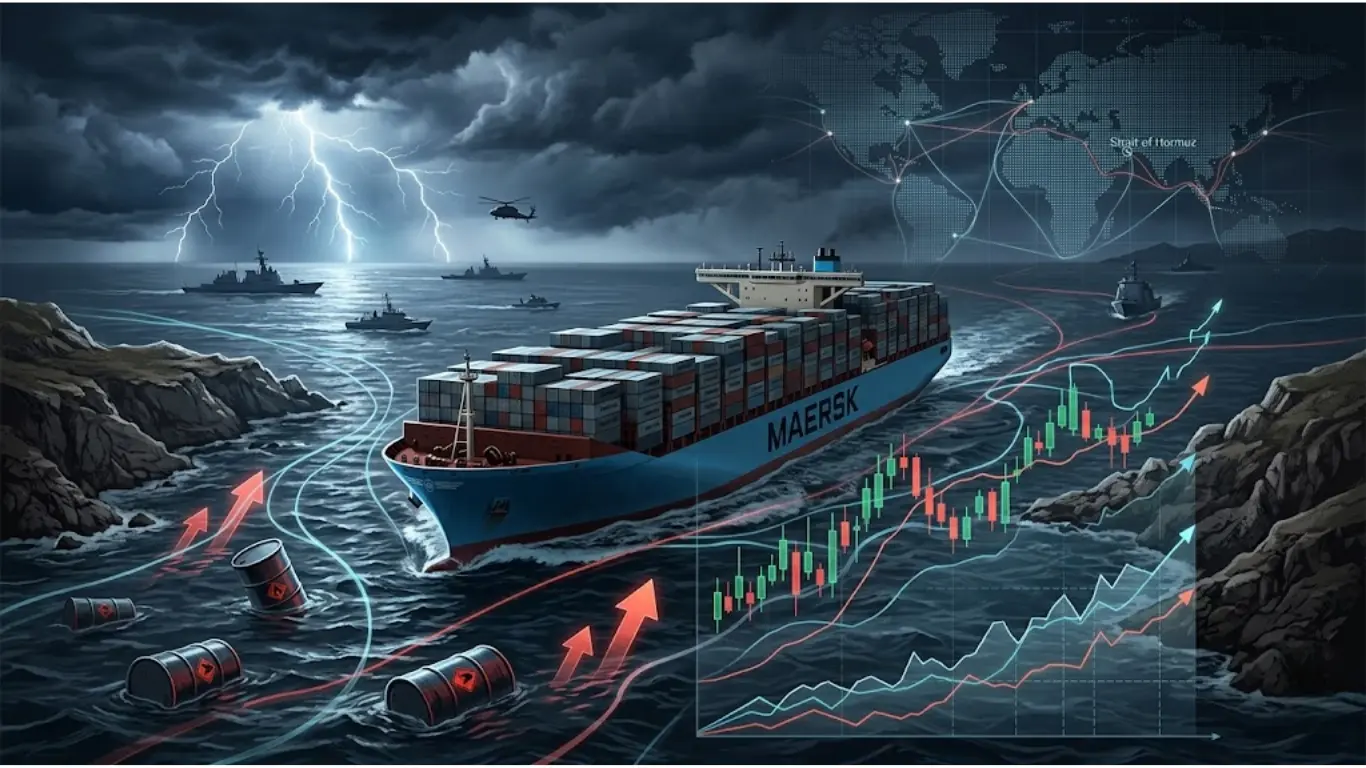
Ship traffic through the Strait of Hormuz stayed at a near-standstill on April 9, 2026, with only seven vessels transiting in the past 24 hours compared to the normal daily average of around 140 ships, according to data from Kpler, Lloyd’s List Intelligence, and Signal Ocean.
This represents well below 10% of normal volumes even after the fragile US-Iran ceasefire took effect earlier this week. The limited transits included just one oil products tanker and six dry bulk carriers. No major crude oil tankers or LNG carriers were reported among them.
Iran continues to assert strong control over the waterway. The Islamic Revolutionary Guard Corps (IRGC) has warned vessels to stick to specific routes passing close to Iranian territorial waters and near Larak Island. Iran’s Ports and Maritime Organization also published designated “safe routes,” effectively requiring coordination with Iranian forces. Reports indicate Tehran may be charging high transit fees and limiting daily passages to around a dozen ships as part of the ceasefire terms.
Hundreds of commercial vessels — estimates range from 180+ tankers carrying roughly 172 million barrels of crude and products to over 800 ships total — remain stranded inside the Persian Gulf or waiting in the Gulf of Oman. More than 20,000 seafarers are affected, with some crews reporting shortages of food and supplies while anchored for weeks.
Major shipping companies, including Japan’s Mitsui O.S.K. Lines (MOL), remain cautious. They are awaiting clearer safety assurances and government guidance before resuming full operations through the chokepoint.
Authority response includes the US administration claiming the strait is open, while Iran maintains conditional passage only for approved vessels. The IMO and industry groups continue to monitor seafarer welfare and call for safe, unrestricted navigation.
Shipping impact remains severe. The Strait of Hormuz normally handles about 20% of global oil and significant LNG volumes. The prolonged disruption has kept oil prices elevated (with brief spikes above $100 per barrel), driven emergency surcharges, forced rerouting via longer alternatives, and increased war risk insurance costs. Freight rates for affected routes stay volatile, while alternative bunkering and port operations face knock-on congestion.
This situation highlights ongoing vulnerabilities in global energy supply chains. Even with a ceasefire in place, full restoration of traffic may take weeks or months as operators assess risks, insurance terms, and Iranian requirements. The near-standstill continues to disrupt tanker, container, and bulk trades linked to the Gulf, affecting energy markets worldwide.