
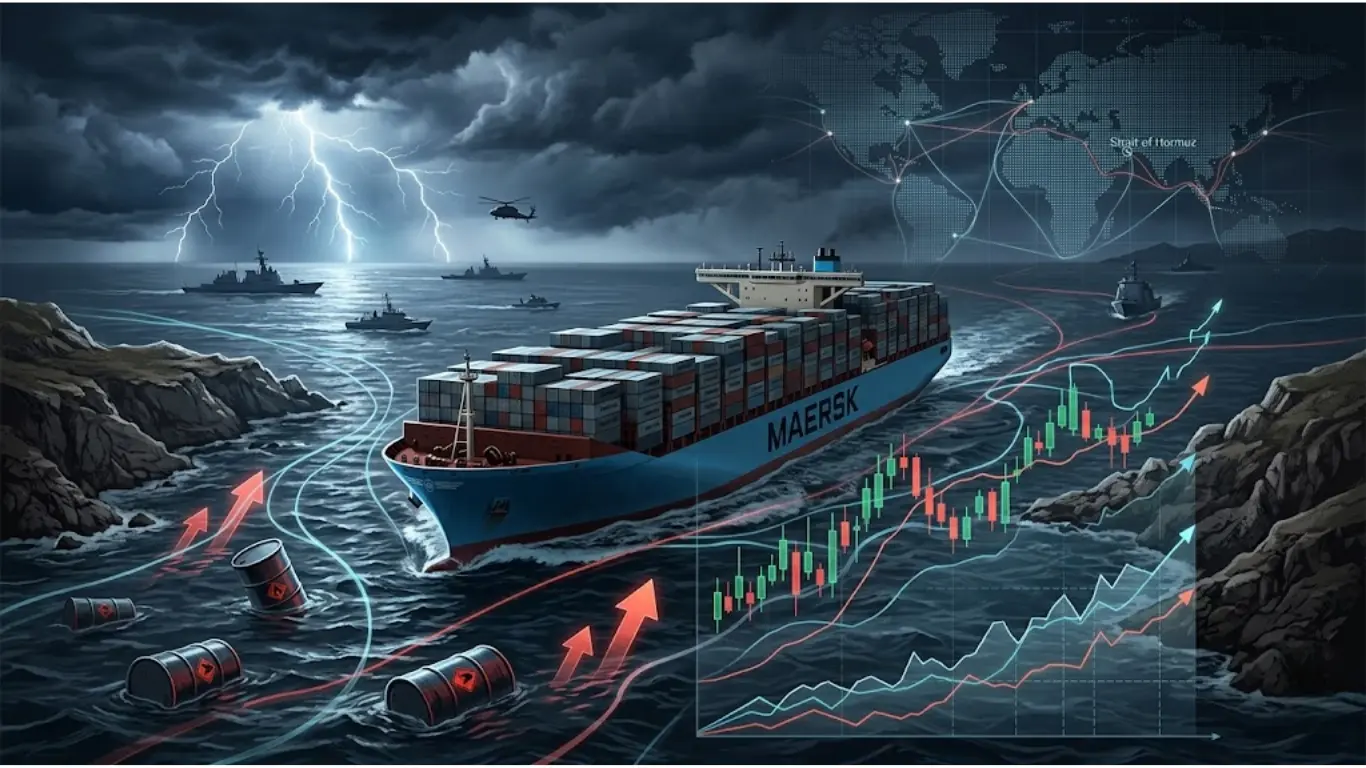
Container ocean freight rates continued climbing on April 9, 2026, driven primarily by surging bunker fuel costs and persistent uncertainty around the Strait of Hormuz, even after the recent US-Iran ceasefire.
FreightWaves reported that Trans-Pacific container rates to the U.S. West Coast have risen by approximately $700 per 40-foot equivalent unit (FEU) in recent weeks. Similar upward pressure is visible on other major lanes as carriers pass on higher fuel expenses through emergency bunker surcharges, peak season surcharges (PSS), and general rate increases (GRI).
The Strait of Hormuz — which normally carries about 20% of global oil and significant LNG volumes — remains severely constrained. Only a handful of vessels (around 5–7 per day) are transiting compared to the usual 130–140, despite the ceasefire. Iran continues to enforce strict routing near its territorial waters and Larak Island, with reports of limited daily permissions and potential high transit fees.
Rising crude oil prices (with Brent and WTI remaining elevated near or above $100/barrel levels in recent weeks) have directly pushed up marine fuel costs at key bunkering hubs such as Singapore. Carriers are actively redistributing fuel from regions with better supply (US, Europe) to Asia and the Middle East to keep operations running. This fuel scarcity and volatility have become the top operational concern for liner operators.
Major carriers including Maersk, Hapag-Lloyd, and CMA CGM have implemented or announced Emergency Bunker Surcharges (EBS) and Emergency Freight Increases, with some charges ranging from $200–$500 per container depending on route and equipment type. These measures aim to offset weekly additional costs estimated in the tens of millions of dollars per carrier.
Shipping impact is widespread:
- Rerouting via longer alternatives adds 10–14 days and extra fuel burn.
- War risk premiums remain high.
- Capacity on non-Gulf lanes faces indirect pressure from vessels still trapped in the Persian Gulf (hundreds of ships, including tankers and containerships, with over 20,000 seafarers affected).
Even with a ceasefire in place, full normalization of Hormuz traffic could take weeks or longer as operators demand clearer safety guarantees and stable insurance terms. The situation continues to ripple through global supply chains, raising delivered costs for goods on Asia-Europe, Trans-Pacific, and Middle East-linked trades.
This development fits squarely into freight & logistics updates amid the ongoing sanctions/disruptions and military + shipping impact from the Hormuz crisis, where fuel availability and cost have overtaken capacity concerns as the dominant driver of ocean rate movements.