
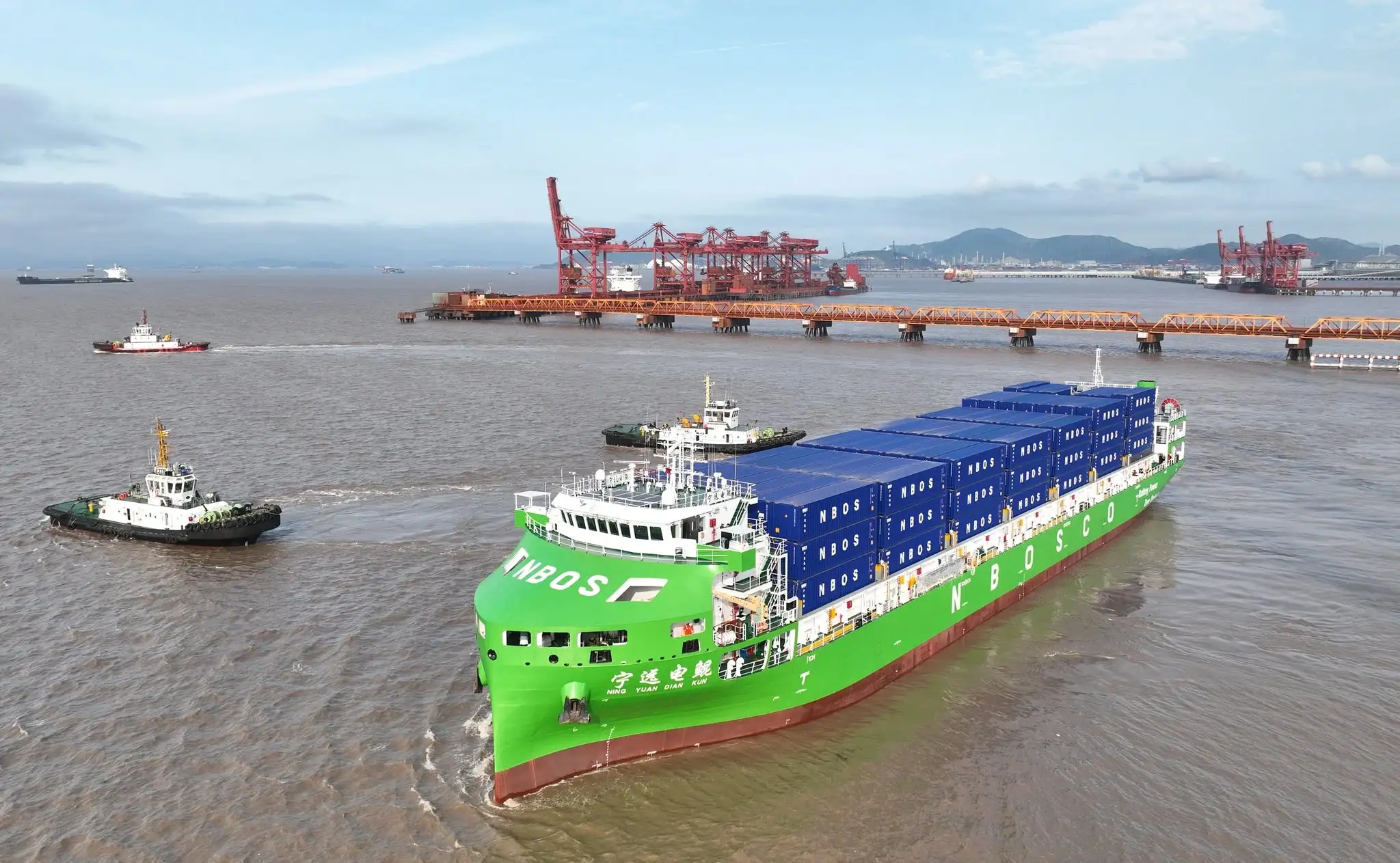
The Ningyuan Diankun, the world’s largest pure electric intelligent container ship and China’s first 10,000-tonne-class vessel of its kind, officially began commercial operations on Wednesday afternoon, April 15, 2026.
The vessel departed from the Beilun port area of Ningbo-Zhoushan Port bound for the Zhapu port area of Jiaxing Port, both in east China’s Zhejiang Province, marking its first revenue-earning voyage on a coastal container route.
Built by Jiangxi Jiangxin Shipbuilding Co., Ltd. and developed by Ningbo Ocean Shipping Co., the Ningyuan Diankun measures 127.8 meters in length and 21.6 meters in width, with a design draft of 6.2 meters. It has a carrying capacity of 742 TEU (twenty-foot equivalent units) and is powered entirely by 10 standardized battery containers providing approximately 20,000 kWh of energy storage equivalent to the combined battery capacity of about 300 household electric vehicles. A supplementary photovoltaic system further supports zero-emission operations.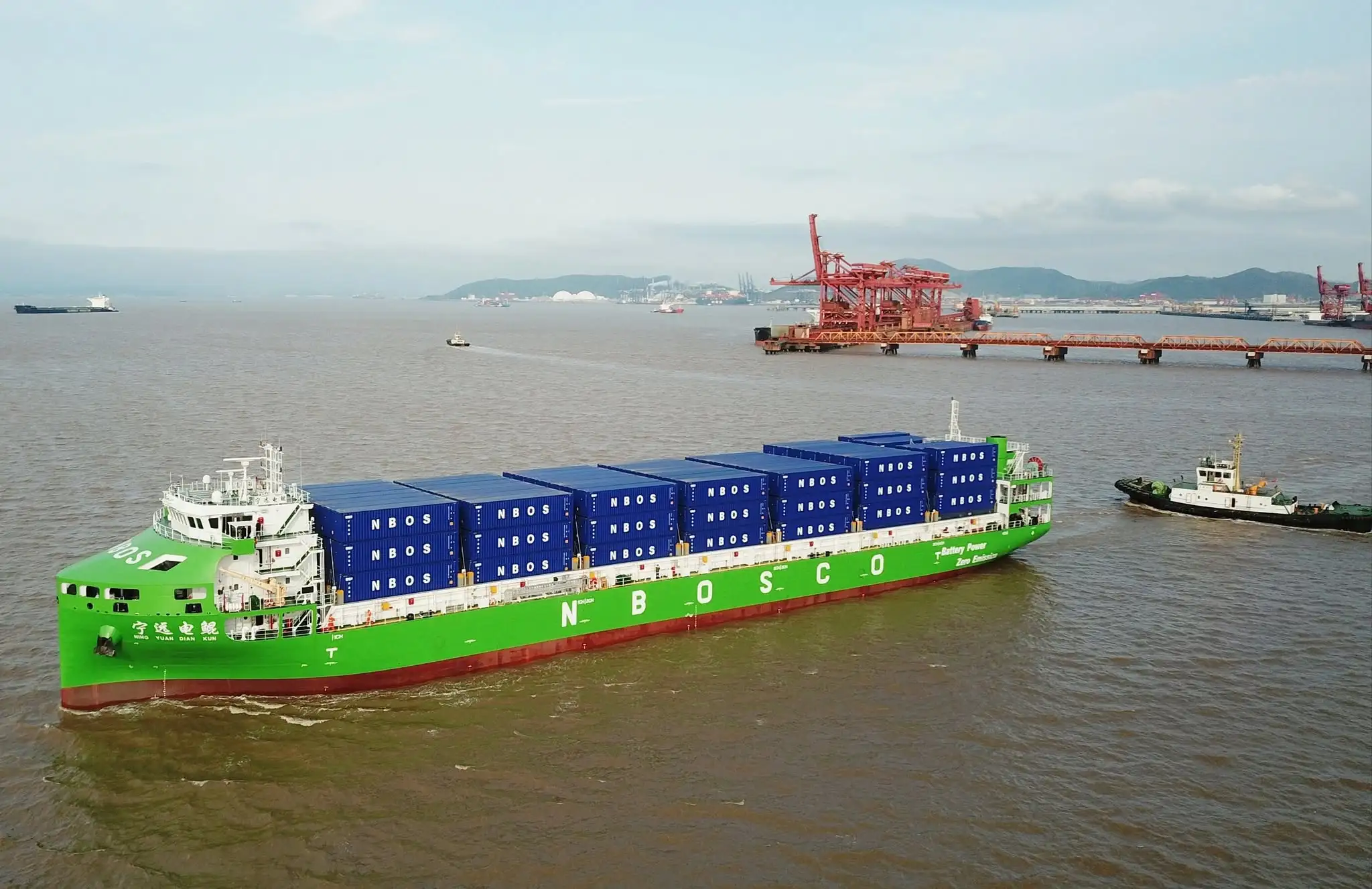
The ship is designed for zero-emission, zero-pollution voyages. It is expected to save around 580 tons of fuel annually and reduce carbon dioxide emissions by more than 1,400 tons per year compared to conventional vessels on the same route. The vessel also features advanced intelligent navigation systems, supporting autonomous and smart operational capabilities.
This milestone represents a significant step in China’s push toward green and intelligent coastal container shipping. The vessel was independently developed and designed by the Shanghai Merchant Ship Design and Research Institute (SDARI), showcasing full life-cycle development of zero-carbon ships with pure electric propulsion and high operational efficiency.
Ningbo-Zhoushan Port stated that the successful entry into service opens a new phase for exploring pure electric power and intelligent navigation in China’s domestic coastal trades, where short-sea routes are ideal for battery-powered vessels due to frequent charging opportunities at major ports.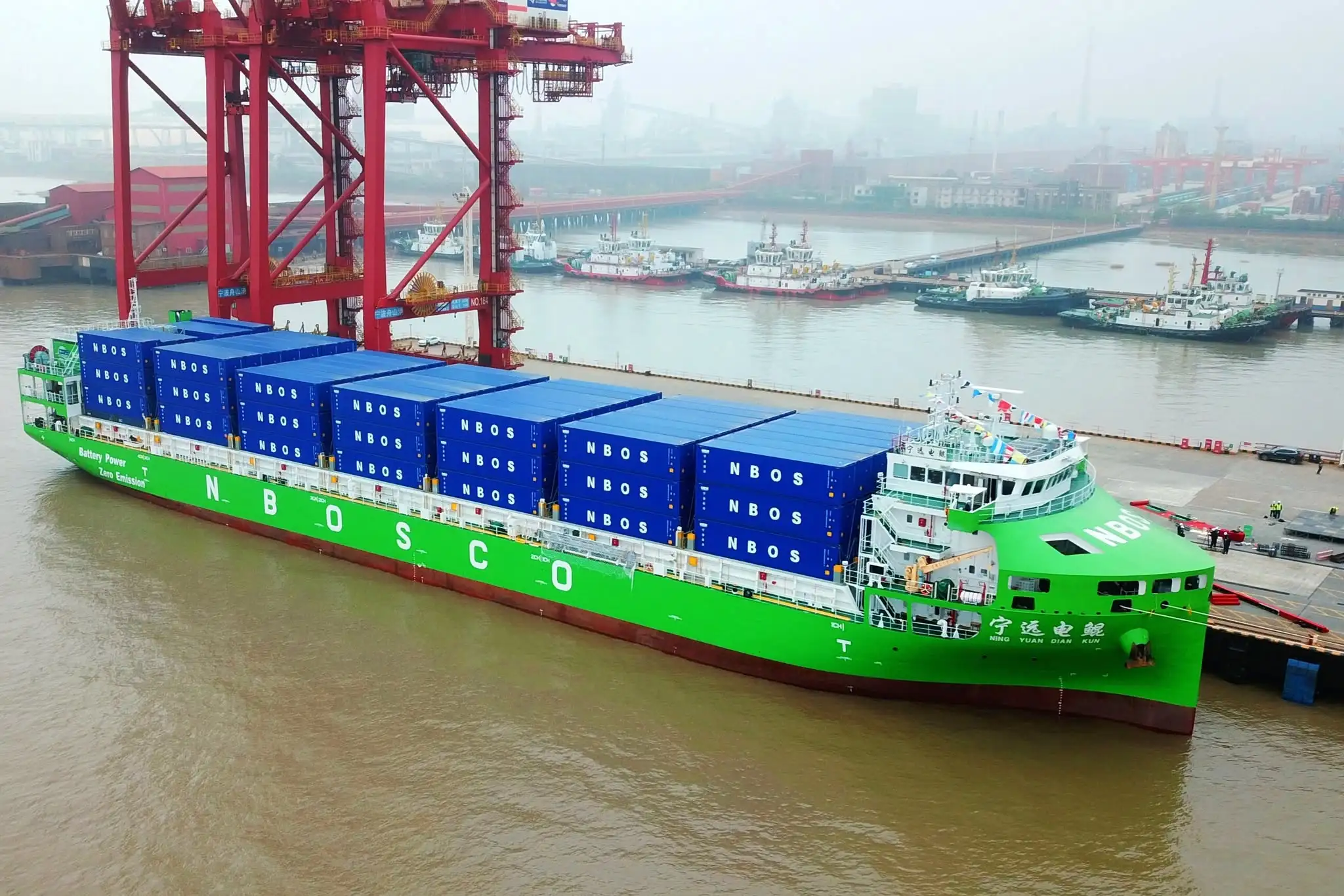
Shipping impact includes growing momentum for alternative-fuel and electric vessels in the coastal and short-sea segment, helping operators meet stricter environmental regulations while reducing fuel costs and emissions on intra-China routes. The deployment of the Ningyuan Diankun adds to the expanding fleet of green containerships and demonstrates the viability of large-scale electric propulsion for commercial operations.
This development fits the new ships / fleet expansion category, highlighting rapid advancements in China’s shipbuilding sector toward sustainable technologies for coastal container trades.