
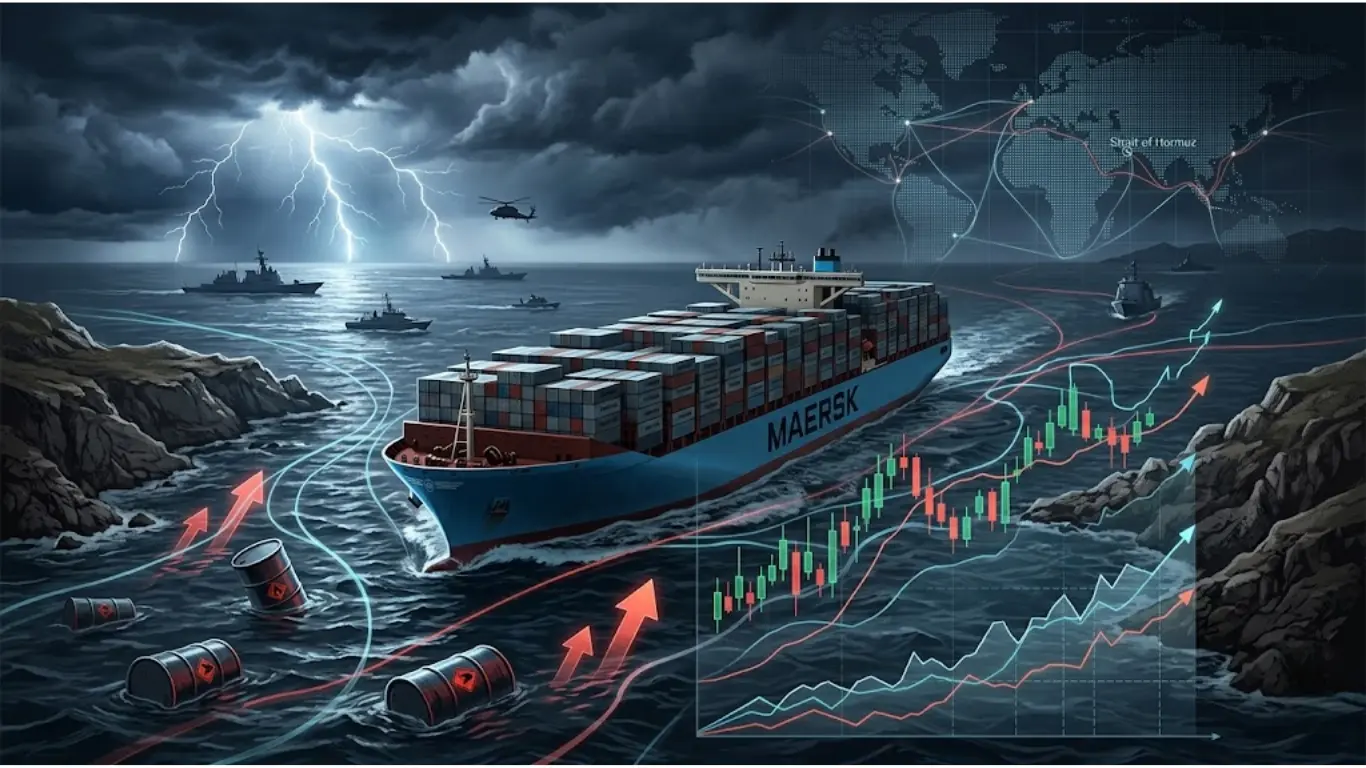
A.P. Moller-Maersk CEO Vincent Clerc has warned that a prolonged closure of the Strait of Hormuz due to the ongoing US-Israel-Iran conflict could reshape global shipping networks for months, driving sustained increases in freight rates, fuel costs, and operational disruptions.
In recent statements and interviews (including with BBC and industry briefings around mid-March 2026), Clerc described the situation as “uncharted territory” for the industry. He noted that the effective halt in transits through the critical chokepoint which normally handles around 20% of global oil and significant LNG volumes has already forced Maersk to suspend services, reroute vessels, and implement multiple emergency surcharges. The carrier has trapped vessels inside the Persian Gulf and is now diverting cargo via alternative ports in Oman, UAE, and Saudi Arabia, often using landbridge connections or feeder shuttles from India.
Maersk has introduced an Emergency Freight Increase effective March 3, 2026, for shipments to/from UAE, Qatar, Saudi Arabia (Dammam and Jubail), Bahrain, Kuwait, Iraq, and Oman (Sohar). Additionally, the company rolled out a temporary Emergency Bunker Surcharge (EBS) starting March 25, 2026, with rates up to $200 per 20ft dry container and $400 per 40ft on headhaul routes (halved on backhauls), plus higher fees for reefers. These measures aim to offset soaring bunker prices, fuel redistribution costs (Maersk is shipping fuel from the US and Europe to Asia as Asian bunkering points run low), longer voyage distances via the Cape of Good Hope or other detours (adding 10–14 days), and elevated war risk insurance.
Clerc emphasized that these extra costs will ultimately be passed on to customers and consumers, estimating a 15–20% increase on some freight rates. He highlighted that even non-Gulf lanes are seeing knock-on effects through higher fuel surcharges, capacity shifts, and supply chain volatility. Maersk has also suspended two key Middle East-linked services and is closely monitoring the situation, with potential for further adjustments every 14 days.
The warning comes as hundreds of commercial vessels remain anchored or waiting near the Strait of Hormuz and Gulf of Oman, with traffic down sharply and multiple reported attacks on ships. Industry analysts expect prolonged disruption to keep tanker and container freight rates elevated, exacerbate marine fuel shortages in key regions, and contribute to broader port congestion at alternative hubs.
This development underscores the severe freight & logistics impact of geopolitical disruptions on one of the world’s most vital energy waterways, forcing carriers to adapt networks rapidly while raising costs across Asia-Europe, trans-Pacific, and intra-Asian trades.