
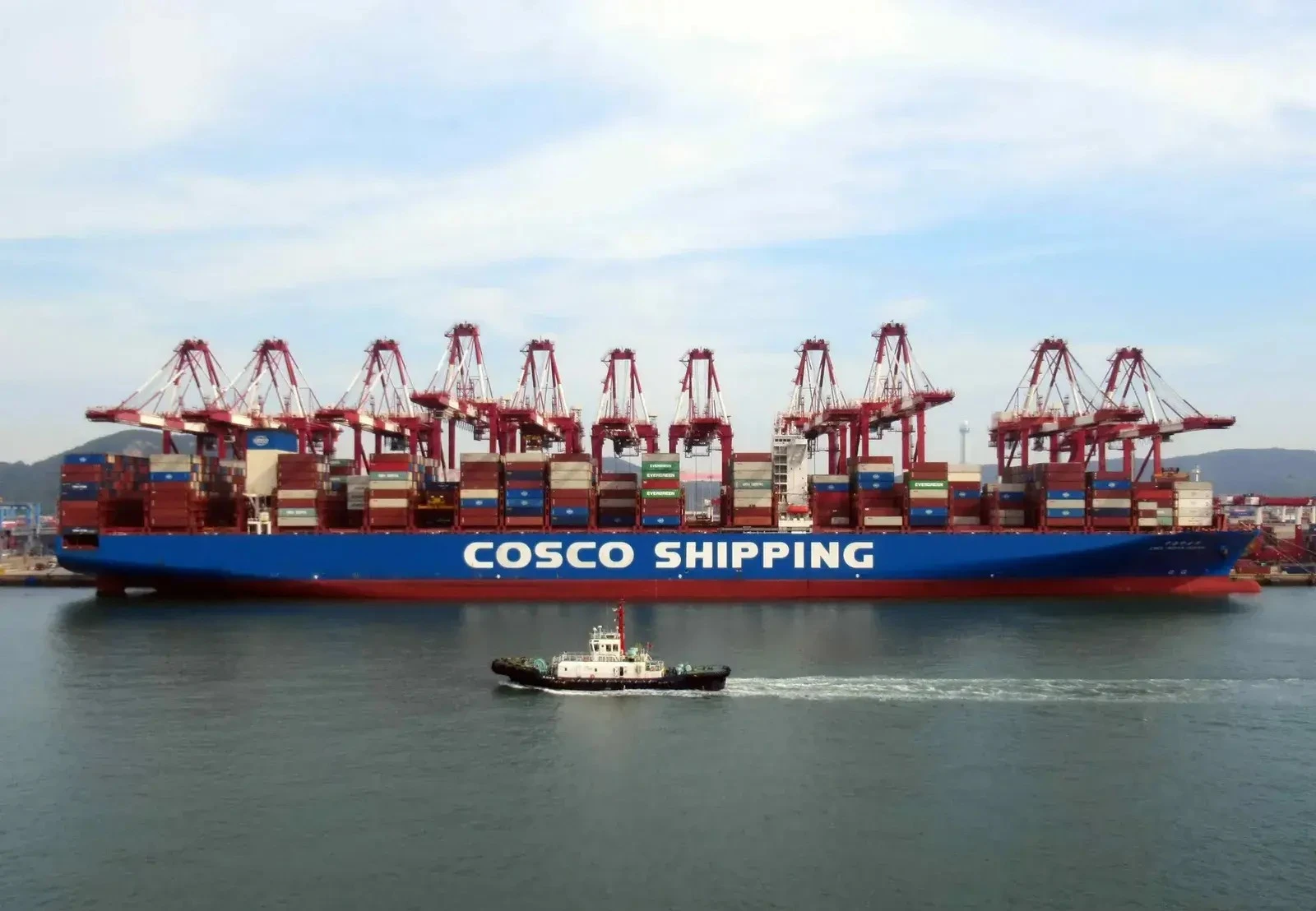
On Monday, March 30, 2026, two ultra-large container ships linked to China’s state-owned COSCO Shipping Corp. the CSCL Indian Ocean (19,100 TEU) and CSCL Arctic Ocean (19,000 TEU) made their second attempt to exit the Persian Gulf through the Strait of Hormuz and successfully transited the chokepoint, according to ship-tracking data from MarineTraffic and analysis by Kpler.
The vessels, both Hong Kong-flagged and signaling Chinese ownership with Chinese crews onboard, sailed in close formation through the Tehran-approved Larak Island corridor into the Gulf of Oman. They are now steaming at elevated speed toward open waters. This marks the first successful outbound transit by major Chinese-operated container ships since the US-Israel-Iran conflict escalated in late February 2026 and effectively halted most commercial traffic through the strait.
The two ships had attempted the same transit on March 27, 2026, but made abrupt U-turns near Larak Island after warnings from Iran’s Islamic Revolutionary Guard Corps (IRGC) Navy. At that time, three Chinese-linked vessels (including the two COSCO boxships and the Hong Kong-owned bulk carrier Lotus Rising) were turned back despite Iran’s earlier assurances of safe passage for “friendly” nations like China.
COSCO had resumed bookings for general cargo to Gulf ports (UAE, Saudi Arabia, Bahrain, Qatar, Kuwait, and Iraq) on March 25, 2026, indicating cautious optimism about reopening routes. The successful second attempt on March 30 comes amid ongoing Iranian enforcement of a “permission-to-transit” regime, with reports of potential high transit fees (up to $2 million per vessel) and strict coordination requirements.
Authority response includes no immediate official comment from COSCO or Chinese authorities, while Iran has not issued a statement on today’s transit. The move is being closely watched by the global shipping industry as a potential test case for whether limited commercial traffic can resume through the critical waterway, which normally handles around 20% of global oil and significant container volumes.
Shipping impact remains significant: overall traffic through the Strait of Hormuz is still down sharply (estimates of 80-90% reduction), with hundreds of vessels still anchored or waiting in the Persian Gulf and Gulf of Oman. Successful transits by major operators like COSCO could signal gradual normalization for certain flags, but most international carriers continue to reroute, apply emergency surcharges, and face elevated war risk premiums. The event adds pressure on freight rates and bunker costs while highlighting the fragile nature of Gulf trade corridors.
This development underscores the complex geopolitical dynamics affecting one of the world’s busiest shipping lanes, where even state-linked Chinese vessels must navigate IRGC oversight and security risks.