
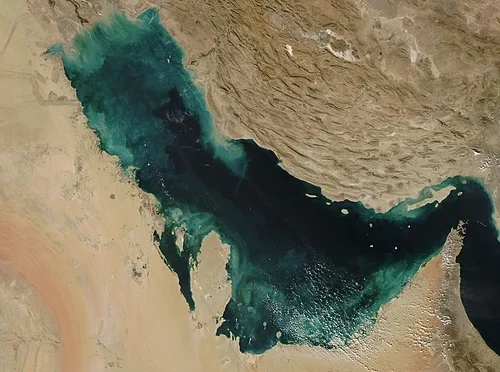
The U.S. Navy Central Command (NAVCENT) has established a broad maritime warning zone across the Persian Gulf (also known as the Arabian Gulf), Gulf of Oman, North Arabian Sea, and Strait of Hormuz on February 28, 2026, following large-scale joint strikes by the United States and Israel on targets inside Iran.
Issued in the early hours of Saturday, the NAVCENT notice warns merchant vessels and aircraft to avoid the designated area if possible due to ongoing military operations under Operation Epic Fury. The U.S. Navy explicitly stated it cannot guarantee the safety of neutral or commercial shipping within the zone, amid risks including potential GPS jamming, spoofing, inadvertent targeting, and misidentification during active combat. Commercial ships are advised to maintain a minimum 30-nautical-mile standoff from U.S. naval units and to respond promptly to coalition hails. While the zone does not prohibit transit in international waters, operators are urged to exercise extreme caution or reroute entirely.
The warning zone declaration came shortly after President Donald Trump announced the launch of major combat operations against Iran, describing them as aimed at eliminating threats from the regime, destroying missile capabilities, annihilating naval assets, and preventing nuclear weapon development. Israel simultaneously conducted preemptive strikes, targeting military, nuclear-related, and leadership sites across cities including Tehran, Isfahan, Qom, and others. U.S. forces employed Tomahawk cruise missiles from Navy ships, fighter aircraft from regional bases and carriers, and one-way attack drones in the initial waves.
Iran responded rapidly with retaliatory missile and drone barrages targeting Israel and U.S. military facilities in Bahrain (including NAVCENT headquarters), Qatar, United Arab Emirates, Kuwait, and Jordan. Explosions were reported near U.S. bases, with some strikes hitting civilian-adjacent areas like a luxury hotel in Dubai. Iranian authorities reportedly broadcast on VHF channels advising ships to avoid the Strait of Hormuz, with unverified claims of temporary closure announcements, though no official Tehran confirmation has been issued.
The escalation has severely disrupted maritime traffic in one of the world’s most vital energy chokepoints. The Strait of Hormuz handles approximately 20-30% of global seaborne oil trade, and major operators have suspended shipments through the passage. Over 750 commercial vessels were reported in or near the strait at the onset of hostilities. Shipping associations like BIMCO have highlighted dramatically increased security risks, with potential for mine-laying, small-boat swarms, or asymmetric attacks by Iranian forces.
This development underscores the profound vulnerability of global supply chains to sudden military flare-ups in the Persian Gulf. The zone’s implementation reflects U.S. efforts to protect neutral shipping while maintaining operational freedom for coalition forces, but it has forced rerouting, delayed transits, and spiked insurance premiums overnight. Similar warnings have historically preceded heightened tensions, such as during past Iran-U.S. confrontations, where commercial navigation faced direct threats from IRGC naval elements.
The situation remains fluid, with ongoing strikes, retaliatory actions, and diplomatic fallout potentially prolonging disruptions. Maritime authorities continue monitoring for further advisories, as any prolonged closure or interference in the Strait of Hormuz could trigger widespread energy market shocks and force alternative routing around Africa for tankers and container ships.