
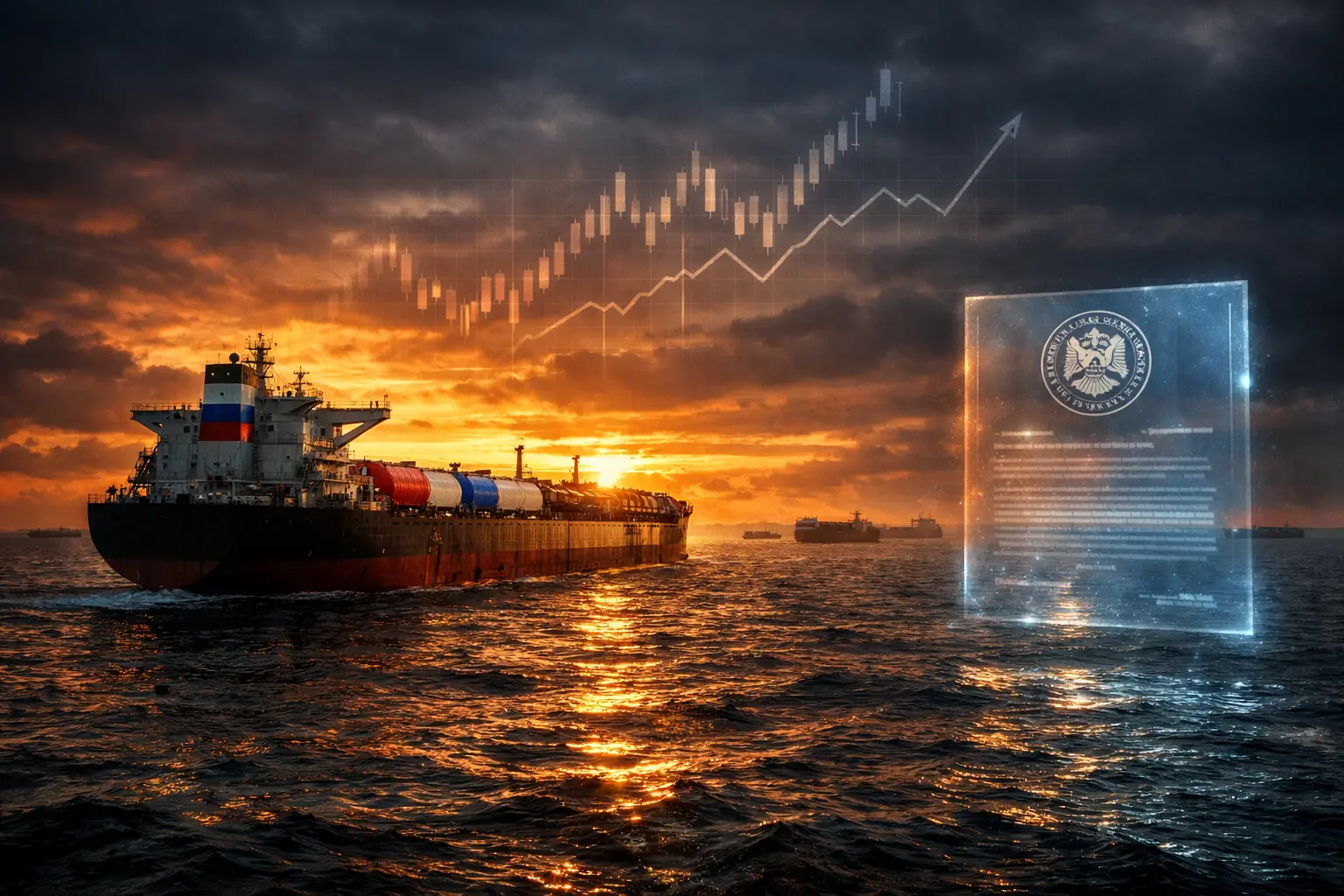
On March 12, 2026, the US Department of the Treasury’s Office of Foreign Assets Control (OFAC) issued General License 134, authorizing the delivery and sale of Russian crude oil and petroleum products loaded on vessels on or before 12:01 a.m. Eastern Time March 12, 2026, through midnight April 11, 2026.
This 30-day waiver expands a prior limited authorization granted to India (issued around March 5, 2026) to all countries worldwide. It targets Russian-origin oil and products already in transit and stranded at sea due to existing sanctions related to Russia’s invasion of Ukraine, including the G7 price cap mechanism (currently around $44.10 per barrel for crude after recent adjustments). The measure aims to inject additional supply into global markets to help tame oil prices that have spiked above $100 per barrel following disruptions from the US-Israel war with Iran, including attacks affecting the Strait of Hormuz transit.
Treasury Secretary Scott Bessent announced the move on social media (X), describing it as a “narrowly tailored, short-term measure” that applies only to oil already in transit and “will not provide significant financial benefit to the Russian government,” which earns most revenue from extraction taxes rather than transit sales. Bessent emphasized the step increases the global reach of existing supply amid short-term disruptions, with potential to affect up to 100 million barrels (per Russian envoy Kirill Dmitriev estimates), roughly a day’s global output.
The waiver follows earlier signals from the Trump administration, including an initial India-specific license and statements considering broader relief to curb energy market shocks. Oil prices eased slightly in Asian trading on March 13 following the announcement, though they remain elevated due to ongoing Middle East tensions.
This development has drawn criticism from European allies (e.g., Germany) and Ukraine’s President Volodymyr Zelenskyy, who warned it could fund Russia’s war efforts (potentially $10 billion impact estimates circulated). Moscow welcomed the move. The US maintains that broader sanctions remain in place, and this is an exceptional, time-limited action tied to stabilizing markets without structurally benefiting Russia long-term.
The waiver highlights vulnerabilities in global energy supply chains, where geopolitical events like the Iran conflict disrupt key chokepoints (Strait of Hormuz handles ~20% of world oil), forcing rapid policy adjustments to prevent prolonged price surges that affect freight rates, bunker costs, and overall shipping economics. It aligns with concurrent efforts like US strategic petroleum reserve releases to mitigate impacts on trade and logistics.