
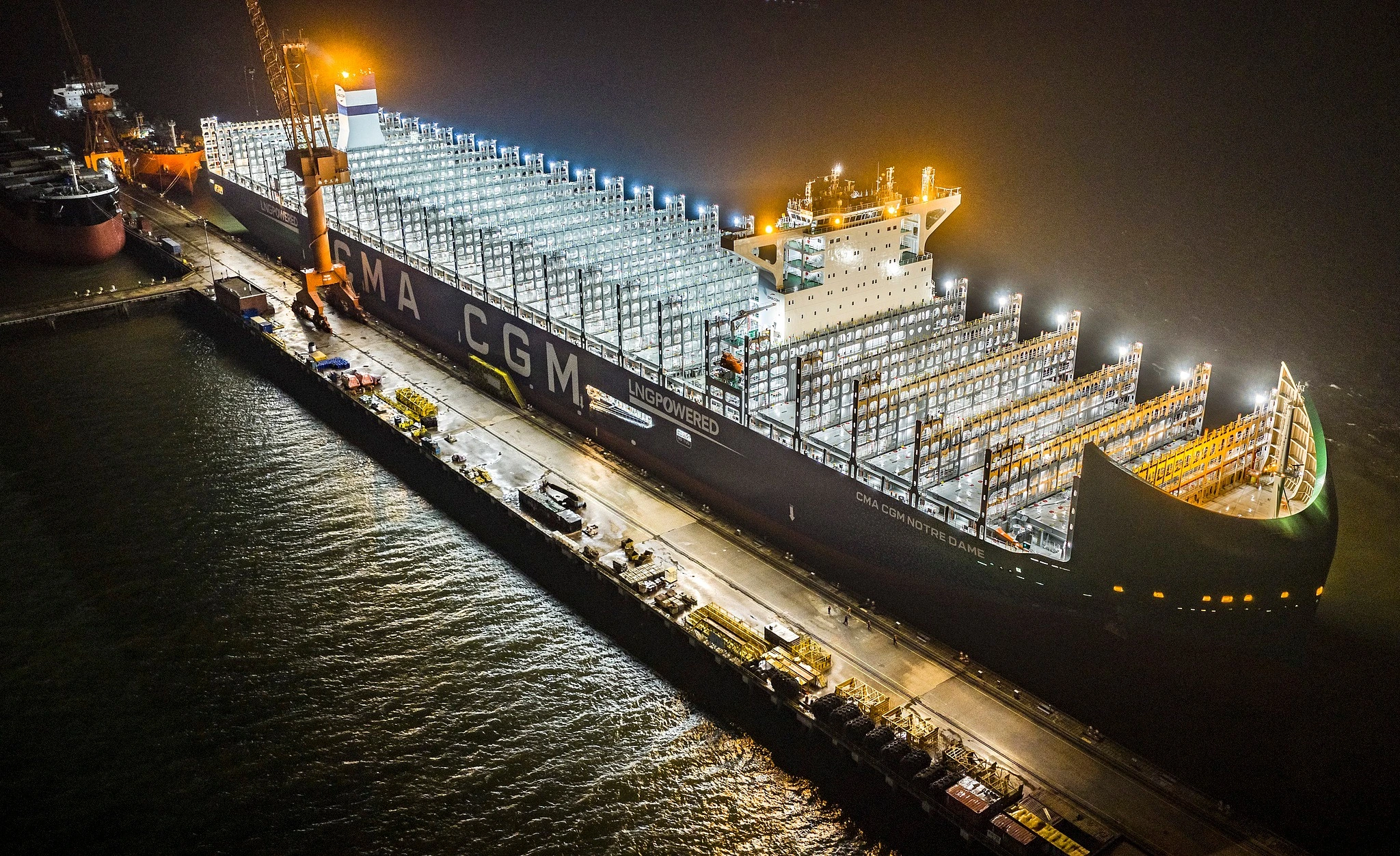
This ultra-large container vessel departed from the dock on Sunday for its initial trial voyage, marking a key milestone in its construction and testing phase. The ship measures 399.9 meters in length and boasts a capacity of 24,212 TEU (twenty-foot equivalent units), making it the largest dual-fuel containership constructed in China to date. It is designed to operate on LNG (liquefied natural gas) as a primary alternative fuel alongside conventional marine fuels, supporting reduced emissions in line with global shipping decarbonization efforts.
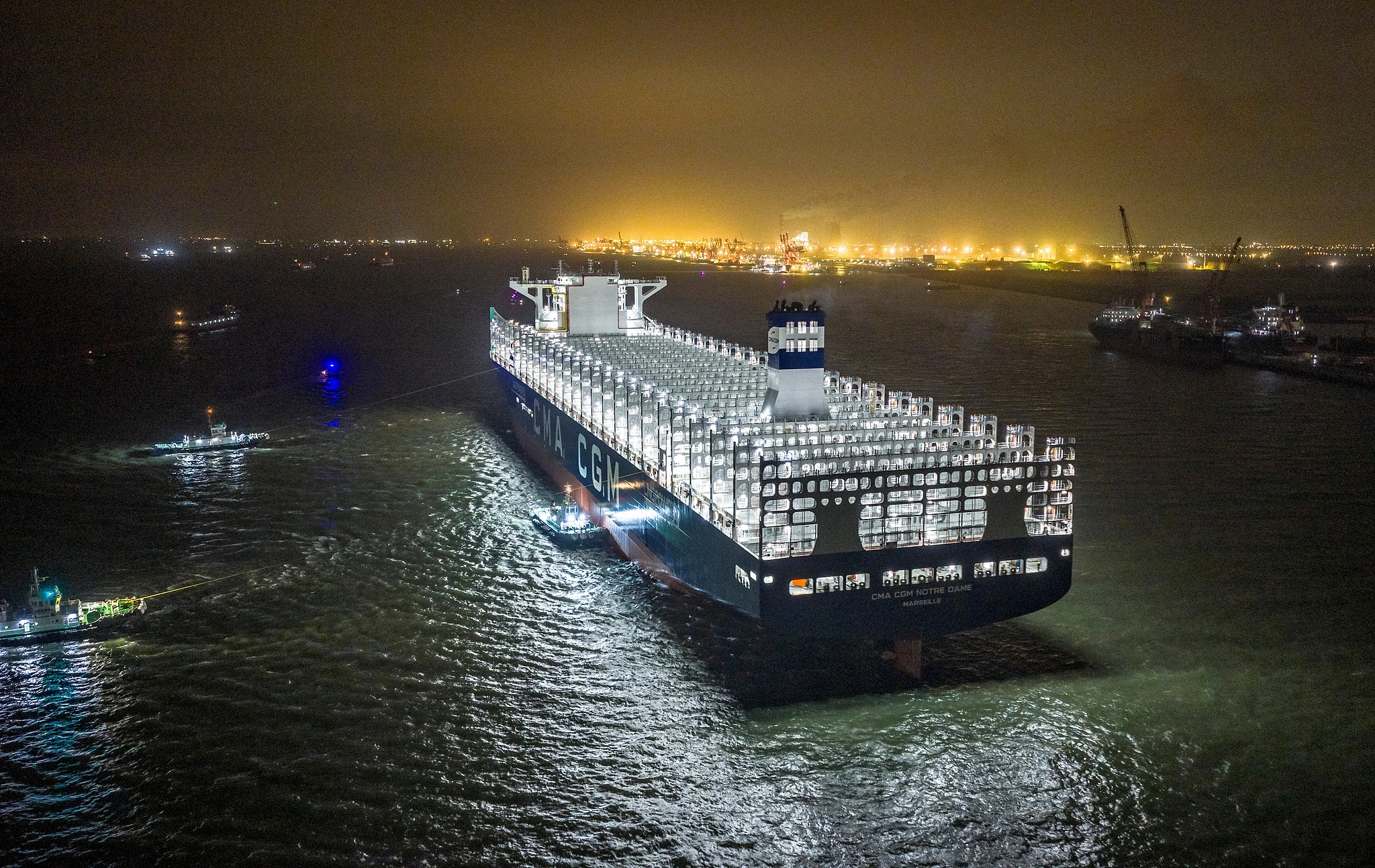
The vessel left the shipyard under its own power or with tug assistance for comprehensive sea trials, which will evaluate propulsion systems, maneuvering capabilities, engine performance under dual-fuel mode, stability, and other critical operational parameters. These trials are essential before final outfitting, delivery, and entry into commercial service.
The shipyard and relevant maritime authorities oversaw the departure and are coordinating the trials in designated waters near the Jiangsu coast. No immediate issues were reported during the initial departure, and the process is proceeding as planned.
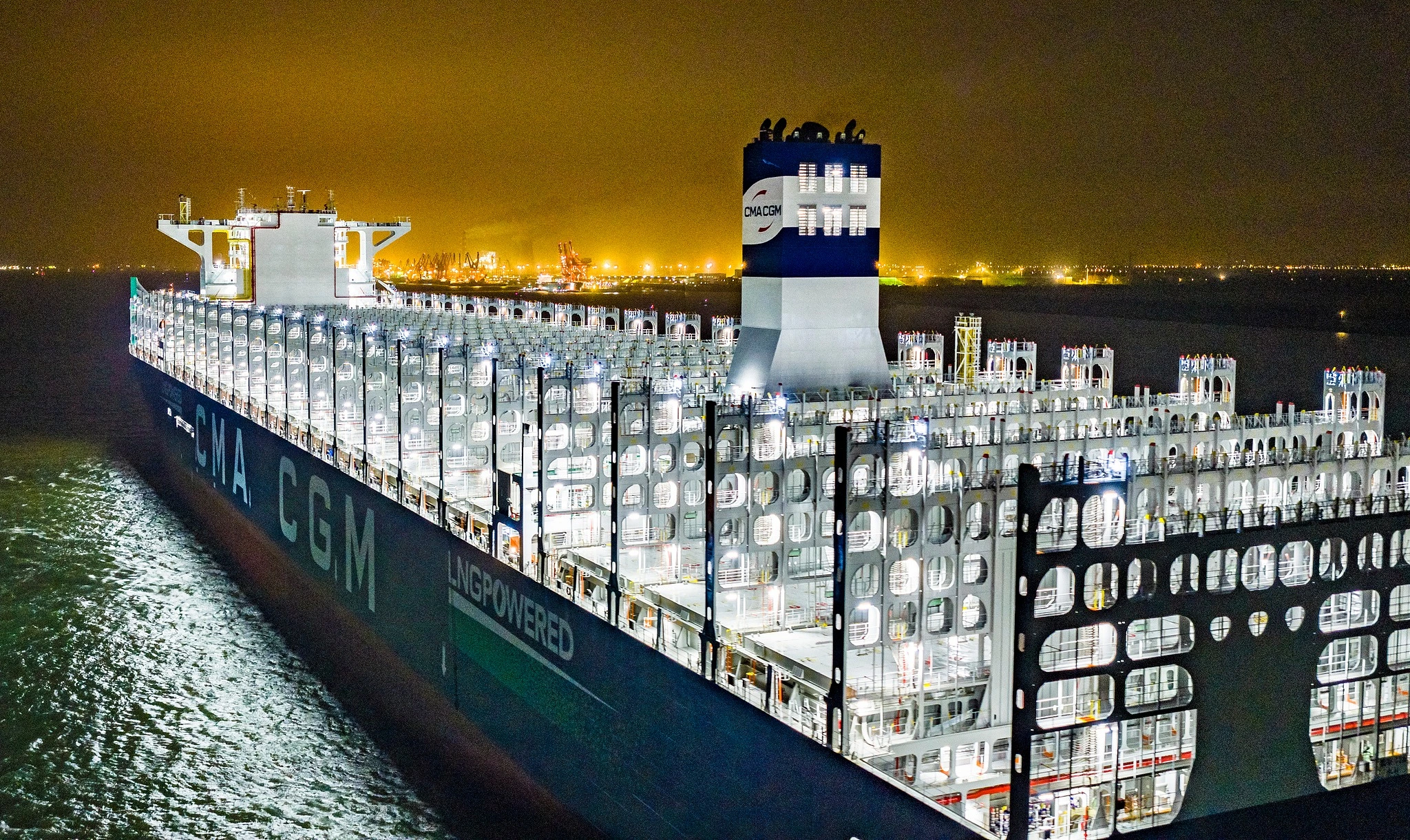
This event underscores the rapid advancement in China’s shipbuilding sector, particularly in green and alternative-fuel technologies for mega containerships. The 24,000+ TEU class represents the cutting edge of ultra-large container vessels (ULCVs), often deployed on major Asia-Europe or trans-Pacific routes where fuel efficiency and capacity are paramount. Similar LNG dual-fuel giants, such as earlier 23,000–24,000 TEU series built for operators like CMA CGM and others at Chinese yards (including Hudong-Zhonghua), have set precedents for emission reductions of up to 20% CO2, 85% NOx, and near-total SOx/PM cuts when using LNG.
The successful completion of these sea trials will pave the way for delivery potentially to a major liner operator contributing to fleet modernization amid ongoing industry pressures from environmental regulations and trade route demands. This development highlights China’s dominant role in building the world’s largest and most advanced containerships, with domestic yards now routinely delivering record-breaking dual-fuel designs that enhance operational sustainability without sacrificing scale.
This incident aligns with broader trends in the shipping industry toward larger, greener vessels to optimize fuel costs and comply with IMO emission standards, especially in high-traffic lanes where mega-ships provide economies of scale.